
Managing the Data Lifecycle: A First Pass at DPDP Compliance Enforcement
Simplifying DPDP compliance enforcement by automating data retention and erasure workflows while empowering DPOs with a centralized management console

Technically enforcing data deletion for DPDP compliance is often a significant implementation challenge. We are experimenting with a 'Compliance Enforcement Service' to handle this.
The Consent Enforcement Service is designed to run periodically (e.g., once a day). It evaluates each principal’s consent and determines the notification/purge action. The service handles retention policies by linking them to specific processing purposes. For example, essential Account Management data is retained for 7 years following deletion to meet statutory requirements, as defined below.
 {
        "id": "purpose_account_management",
        "retention_duration_value": 7,
        "retention_duration_unit": "YEARS",
        "retention_start_event": "CONSENT_WITHDRAWN"
 }
Conversely, Website Analytics records are automatically flagged for purge after 2 years or upon consent withdrawal, as defined below.
 {
        "id": "purpose_website_analytics",
        "retention_duration_value": 2,
        "retention_duration_unit": "YEARS",
        "retention_start_event": "CONSENT_GIVEN",
 }
Before a retention policy expires, the service will generate a notification record. When a Data Principal withdraws consent, we have implemented a workflow that attempts to deactivate the account immediately to prevent further processing, while scheduling the back-end purge in accordance with the retention policy. However, when the Data Principal issues an erasure request, the purge will be initiated in the subsequent compliance enforcement service run.
To keep the system lightweight, we have opted to generate the notifications and store them in a table. The data fiduciary’s existing notification service can plug in via an API and dispatch notifications to various stakeholders.
These background tasks are visible to the Data Protection Officer (DPO).
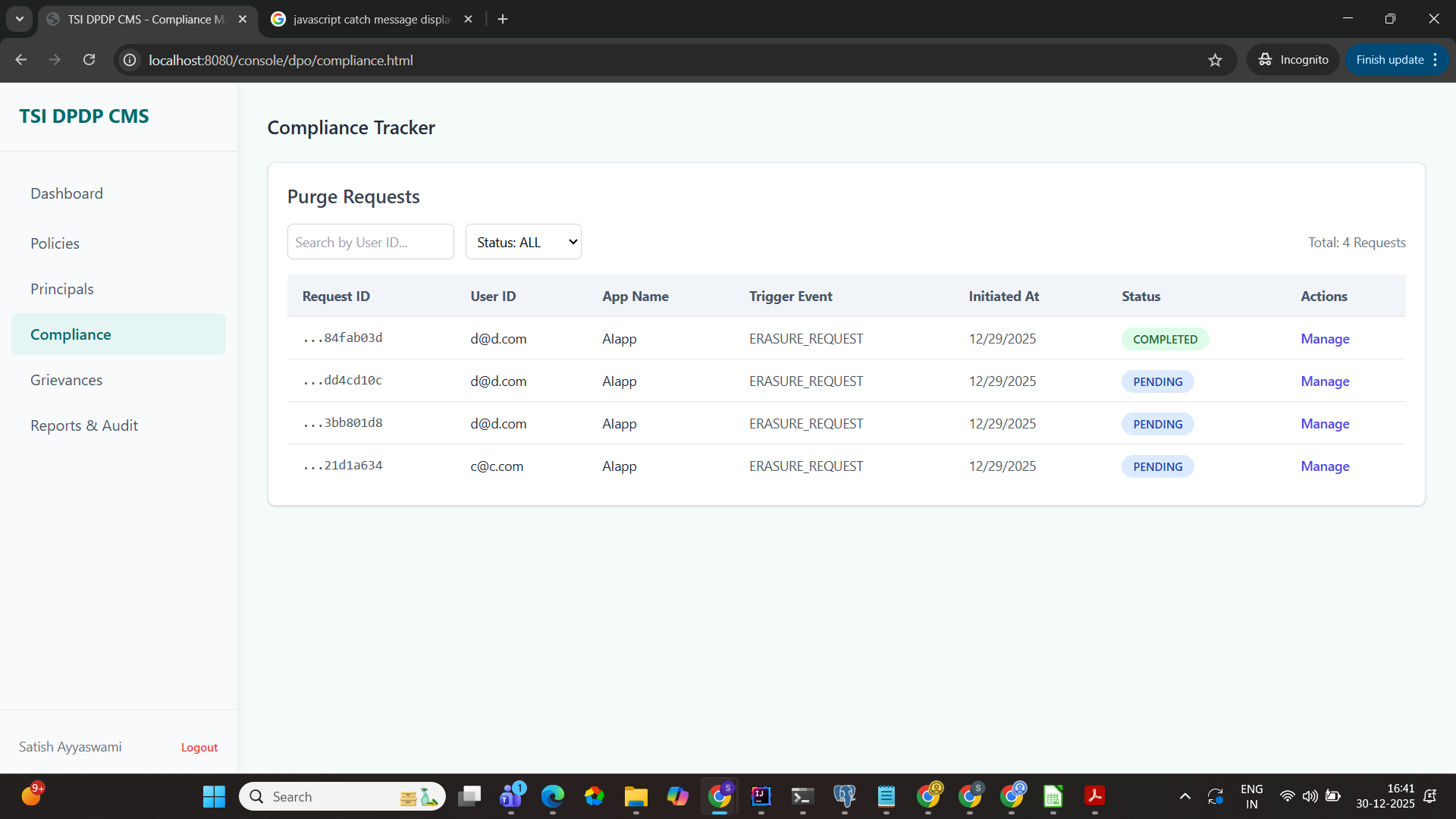
The CMS console allows DPO to review purge requests and manually update their status—from IN_PROGRESS to COMPLETED. This manual path ensures that an audit trail exists even when automated deletion isn’t fully integrated. DPO can also initiate purge requests directly from their console if they receive a grievance call from a Data Principal.